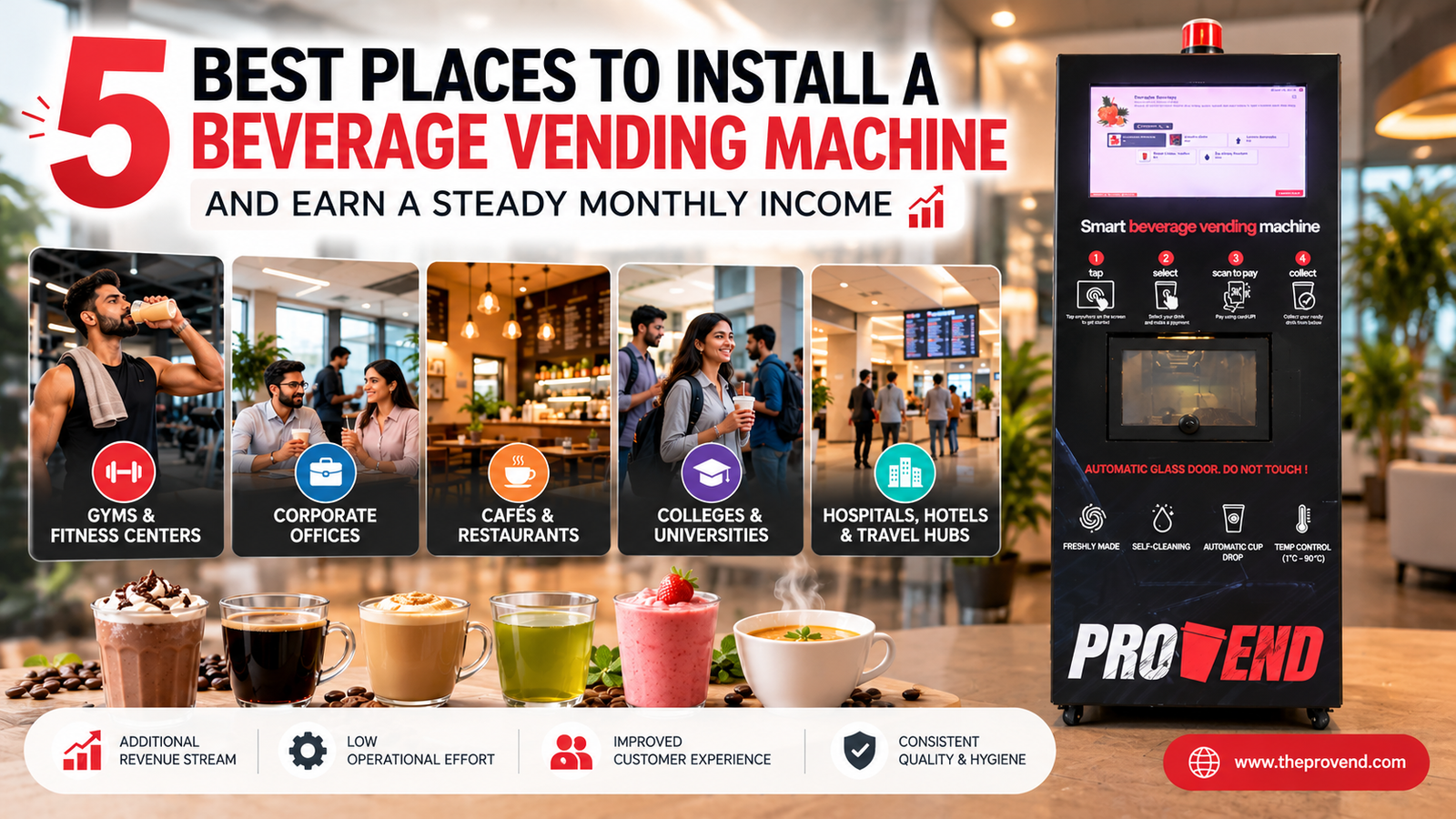
The way people purchase beverages has changed dramatically over the last few years. Today, customers expect speed, convenience, hygiene, and consistency wherever they go. Whether they’re grabbing a coffee before work, enjoying a protein shake after a workout, or looking for a refreshing cold drink during lunch, they want their beverage served quickly without compromising on quality.
As a result, businesses are actively looking for smarter ways to serve beverages while reducing operational costs. This is where smart beverage vending machines are making a significant impact.
Unlike traditional vending machines that only dispense packaged products, modern beverage vending machines can prepare fresh hot and cold drinks instantly. If the beverage ingredients are available in a water-soluble powdered premix, the machine can automatically mix them with water and serve a perfectly prepared drink within seconds.
This versatility allows businesses to offer a wide variety of beverages, including:
Protein Shakes
Coffee
Tea
Green Tea
Lemon Tea
Hot Chocolate
Soups
Energy Drinks
Electrolyte Drinks
Malt Beverages
Milkshakes
And many more
Furthermore, businesses no longer need dedicated staff to prepare every beverage manually. Instead, they can automate the entire process while maintaining consistent taste, reducing ingredient wastage, and serving customers much faster.
However, simply owning a vending machine isn’t enough.
Choosing the right location is what determines whether your machine becomes a profitable investment or an underutilized asset.
In this guide, we’ll explore five of the most profitable places to install a beverage vending machine and explain why these locations consistently deliver excellent business opportunities.
Why Location Matters More Than the Machine
Many first-time buyers believe that purchasing a vending machine automatically guarantees profits. Unfortunately, that’s one of the biggest misconceptions in the vending industry.
In reality, the success of a vending machine depends more on its location than on the machine itself.
Even the most advanced machine may struggle to generate sales if it’s installed in a location with low footfall or limited customer demand. On the other hand, placing the same machine in a busy environment with the right audience can significantly increase daily beverage sales.
Before selecting a location, consider the following factors:
Daily footfall
Customer waiting time
Beverage consumption habits
Availability of alternative beverage options
Space availability
Electricity and water access
Ease of maintenance
Moreover, businesses should also evaluate whether customers are likely to purchase beverages multiple times throughout the day. Locations where people spend several hours—such as offices, gyms, hospitals, and colleges—often provide better long-term revenue opportunities than places with only occasional visitors.
Suggested Image 1 (Place immediately below this section)
Image: Modern smart beverage vending machine installed in a premium commercial environment.
Alt Text: Smart beverage vending machine serving hot and cold drinks in a commercial space.
File Name: smart-beverage-vending-machine-commercial.jpg
 Suggested Image 1 (Place immediately below this section)
1. Why Gyms & Fitness Centers Are the Perfect Place for a Beverage Vending Machine
Among all commercial locations, gyms remain one of the strongest markets for beverage vending machines.
Fitness enthusiasts actively look for convenient post-workout nutrition. However, many gyms still rely on manually prepared shakes, limited café counters, or packaged beverages. This creates delays during peak hours and increases operational costs.
A smart beverage vending machine solves this problem by allowing members to prepare fresh drinks in seconds without waiting for staff assistance.
Additionally, gym owners can introduce a wider beverage menu without increasing manpower.
Some popular beverages include:
Whey Protein Shakes
Mass Gainer Drinks
Electrolyte Drinks
BCAA Beverages
Energy Drinks
Black Coffee
Green Tea
Lemon Tea
Furthermore, automated dispensing ensures that every drink maintains consistent taste and portion size, improving customer satisfaction while reducing ingredient wastage.
Why It Works
High repeat customers
Daily demand
Health-conscious audience
Excellent upselling opportunities
Low operational effort
Revenue Opportunity
Imagine a gym with just 250 active members.
If only 25 members purchase one beverage every day at an average selling price of ₹80, the daily revenue becomes:
25 × ₹80 = ₹2,000 per day
Over a month, that’s approximately ₹60,000 in beverage sales before accounting for operating costs.
Larger gyms with multiple beverage options may achieve significantly higher revenues depending on member engagement and pricing.
Gym member purchasing a freshly prepared protein shake from a smart vending machine.
Alt Text: Gym member using a protein shake vending machine after a workout.
File Name: protein-vending-machine-gym.jpg
2. Why Corporate Offices Benefit from a Smart Beverage Vending Machine
Modern workplaces are changing rapidly.
Instead of maintaining traditional pantry services that require dedicated staff throughout the day, many organizations are adopting self-service beverage stations.
Employees typically consume multiple beverages during working hours, including coffee, tea, hot chocolate, green tea, and energy drinks.
Consequently, installing a beverage vending machine in an office can improve employee convenience while reducing the workload on pantry staff.
Moreover, businesses can provide premium beverages without investing in expensive café infrastructure.
A single smart beverage machine can serve hundreds of employees throughout the day with consistent quality.
Ideal Beverages
Coffee
Cappuccino
Latte
Tea
Green Tea
Lemon Tea
Hot Chocolate
Protein Drinks
Malt Beverages
Business Benefits
Faster beverage service
Lower labour dependency
Consistent beverage quality
Reduced ingredient wastage
Improved employee experience
24/7 beverage availability
Many organizations also appreciate the ability to customize beverage menus according to employee preferences, making automated beverage stations an attractive workplace amenity.
Beverage vending machine installed in a modern office pantry or break room with employees using it.
Alt Text: Employees using a smart beverage vending machine in an office pantry.
File Name: office-beverage-vending-machine.jpg
3. Why Cafés & Restaurants Should Install a Smart Beverage Vending Machine
Cafés and restaurants constantly look for ways to improve customer experience while maintaining operational efficiency. However, expanding a beverage menu often requires additional staff, more equipment, and increased preparation time.
A smart beverage vending machine solves this challenge by allowing businesses to serve a wide range of beverages from a single automated system.
For example, instead of purchasing separate machines for coffee, hot chocolate, soups, or specialty drinks, a single machine can prepare multiple beverages using water-soluble premixes.
As a result, restaurants can expand their menu without increasing kitchen complexity.
Additionally, beverage preparation becomes faster and more consistent, especially during peak hours when customer demand is at its highest.
Popular Beverages for Cafés & Restaurants
Cold Coffee
Cappuccino
Café Latte
Hot Chocolate
Soups
Lemon Tea
Green Tea
Milkshakes
Malt Beverages
Protein Drinks
Specialty Seasonal Drinks
Why It Works
Faster service during busy hours
Consistent taste in every cup
Reduced labour costs
Lower ingredient wastage
Easier menu expansion
Improved customer satisfaction
For businesses serving hundreds of customers daily, even reducing beverage preparation time by a minute or two can significantly improve overall service efficiency.
Image: Beverage vending machine installed inside a modern café or restaurant.
Alt Text: Commercial beverage vending machine inside a café serving multiple drinks.
File Name: cafe-beverage-vending-machine.jpg
4. Why Colleges & Universities Should Install a Smart Beverage Vending Machine
Educational institutions have thousands of students and faculty members spending several hours on campus every day.
Consequently, there is a continuous demand for affordable beverages throughout the day.
Many students prefer grabbing a quick drink between lectures instead of waiting in long cafeteria queues.
Installing a beverage vending machine allows institutions to provide hygienic, self-service beverages while minimizing operational requirements.
Moreover, colleges can rotate beverage offerings based on seasonal demand.
During winter, hot coffee, tea, and hot chocolate remain popular.
During summer, cold coffee, electrolyte drinks, and refreshing beverages often experience higher demand.
Popular Student Choices
Cold Coffee
Coffee
Tea
Hot Chocolate
Lemon Tea
Green Tea
Protein Drinks
Energy Drinks
Benefits
Quick self-service
Affordable beverage options
Reduced cafeteria queues
Low maintenance
Continuous availability
Educational campuses often become long-term installation locations because the customer base remains consistent throughout the academic year.
Image: Students using a beverage vending machine inside a college campus.
Alt Text: College students buying beverages from a smart vending machine.
File Name: college-vending-machine.jpg
5. Why Hospitals, Hotels & Travel Hubs Are Perfect for Smart Beverage Vending Machines
Some locations never truly stop operating.
Hospitals, hotels, airports, railway stations, and large transport hubs require beverage availability throughout the day and night.
Visitors, patients, employees, and travellers frequently need quick refreshments without waiting for cafés or food courts to open.
Therefore, automated beverage machines become an excellent solution.
Hospitals can provide tea, coffee, soup, and electrolyte drinks.
Hotels can offer premium self-service beverage stations in lounges and common areas.
Meanwhile, airports and railway stations can provide travellers with fast access to fresh beverages at any hour.
Ideal Beverage Menu
Coffee
Tea
Green Tea
Hot Chocolate
Soup
Electrolyte Drinks
ORS Drinks
Lemon Tea
Business Advantages
24/7 availability
Reduced dependency on staff
Faster customer service
Hygienic beverage preparation
Consistent beverage quality
Because these locations experience continuous footfall, they often provide excellent long-term earning potential.
Image: Beverage vending machine in a hotel lobby or hospital waiting area.
Alt Text: Self-service beverage vending machine installed in a hotel lobby.
File Name: hotel-hospital-beverage-machine.jpg
What Determines Your Monthly Income?
While vending machines can create an additional revenue stream, actual earnings depend on several important factors.
These include:
Daily customer footfall
Beverage pricing
Ingredient costs
Product selection
Machine uptime
Location visibility
Marketing and promotions
Customer repeat rate
For example, consider this simplified scenario:
| Daily Cups Sold | Selling Price per Cup | Approximate Monthly Revenue* |
|---|---|---|
| 40 | ₹50 | ₹60,000 |
| 80 | ₹50 | ₹1,20,000 |
| 120 | ₹60 | ₹2,16,000 |
*These figures illustrate gross revenue only. Actual profit depends on ingredient costs, maintenance, rent (if applicable), utilities, and other operating expenses.
Rather than focusing only on the number of cups sold, businesses should also optimize beverage variety, pricing strategy, and customer experience to maximize long-term returns.
Why Versatile Beverage Machines Offer a Competitive Advantage
Traditional vending machines are often designed for a single category of products.
However, customer preferences continue to evolve.
Today’s businesses need flexibility.
Imagine offering coffee in the morning, protein shakes in the afternoon, hot soup during winter evenings, and refreshing beverages during summer—all from the same machine.
If your beverage premix is water-soluble, a modern beverage vending platform can prepare it quickly and consistently.
This flexibility enables businesses to adapt to changing customer demand without investing in multiple beverage systems.
As a result, they can increase menu variety while optimizing space, labour, and operational costs.
Frequently Asked Questions
Can beverage vending machines serve both hot and cold drinks?
Yes. Depending on the machine’s design and configuration, businesses can serve both hot and cold beverages from a single automated system. This allows operators to offer everything from coffee and tea to protein shakes, soups, hot chocolate, and other water-soluble premix-based drinks while maintaining consistent quality and reducing manual preparation.
Which businesses benefit the most from beverage vending machines?
Gyms, cafés, restaurants, hotels, corporate offices, hospitals, educational institutions, shopping malls, airports, manufacturing facilities, and co-working spaces are among the most suitable locations.
Can I serve beverages other than coffee?
Absolutely. Depending on the machine and compatible premixes, businesses can serve protein shakes, tea, soups, hot chocolate, milkshakes, electrolyte drinks, lemon tea, green tea, and many other beverages.
Do beverage vending machines reduce labour costs?
They can reduce the need for manual beverage preparation, improve consistency, and allow existing staff to focus on customer service and other operational tasks.
How do I choose the best location?
Look for locations with consistent footfall, longer customer dwell times, high beverage demand, and easy access to electricity and water.
Final Thoughts
Choosing the right location is one of the most important decisions when investing in a beverage vending machine.
Whether you install it in a gym, corporate office, café, restaurant, college, hospital, or hotel, the goal remains the same: provide customers with quick, hygienic, and consistently prepared beverages while creating an additional revenue opportunity for your business.
Equally important is selecting a solution that offers flexibility. A machine capable of preparing multiple hot and cold beverages from compatible water-soluble premixes allows businesses to adapt to changing customer preferences without investing in separate equipment for every drink category.
As self-service technology continues to gain popularity, businesses that embrace beverage automation today can improve operational efficiency, enhance customer experience, and position themselves for long-term growth.
Looking for a Smart Beverage Vending Solution?
If you’re planning to install a beverage vending machine in your gym, café, restaurant, corporate office, hotel, college, or any other commercial space, choosing the right solution can make all the difference.
At ProVend, we build smart beverage dispensing solutions capable of preparing a wide range of hot and cold beverages using compatible water-soluble premixes. Whether your goal is to improve customer experience, automate beverage service, or create an additional revenue stream, our team can help you find the right solution.
 Explore our beverage vending solutions: https://www.theprovend.com/